

10+ Best Link-Building Marketplaces: Key Features and Pricing
In search of the best link-building marketplaces? Here, you will find the best agencies that will help you boost traffic and leads.
7 Top Fractional Marketing Agencies: Overview, Pricing, and Limitations
Heard of fractional marketing agencies? This blog comprises the top fractional marketing agencies in 2026 that will save you money,

What is Search Engine Marketing Intelligence? Benefits, Challenges, and Tools
Want to increase your website’s traffic? Know what is search engine marketing intelligence, benefits, and key components for instant traffic generation.

Custom Web Application Development: Benefits, Types & Process
What is Custom web application development? Explore the easiest step-by-step process to develop a custom web application.

Top Paid Search Intelligence To Cut CPC & Boost ROI In 2026
Paid search intelligence is widely used for a strategized ad production and running. But to execute, you need a list of intelligent tools.
What Is SEO? One Trick That Can Change Things Overnight
SEO is an evergreen topic when it comes to digital marketing or scaling your business online. Let’s understand in depth how it can be done from scratch.
Brand Tracking: Do You Know What People Talk About Your Brand?
As per brand awareness statistics 2026, brands with higher brand awareness have 2.7x more conversions than others. Also, 82% of consumers choose a known brand rather than an unfamiliar one.
But why am I making you aware of this data? The answer is to make you understand the importance of brand tracking. Today, it is one of the most ineluctable factors in growing a business. Keep reading to understand its meaning, methods, importance, best tools, and companies offering this service.
What is Brand Tracking?
In simple words, brand tracking is about keeping track of how your brand is performing in the market over time. It is a continuous process of analyzing brand health by measuring metrics, including awareness, perception, loyalty, and comprehensive brand equity.
What is the Importance of Brand Tracking?
A survey conducted by Dynata where 65% of respondents and an additional 9% of U.S. consumers said they love fewer than three brands, and some said they don’t even like a single brand. This clearly depicts the fugitive brand loyalty. So, let’s get to the reasons that businesses need to step up to track their brands.
1. Broader View on Brand Health
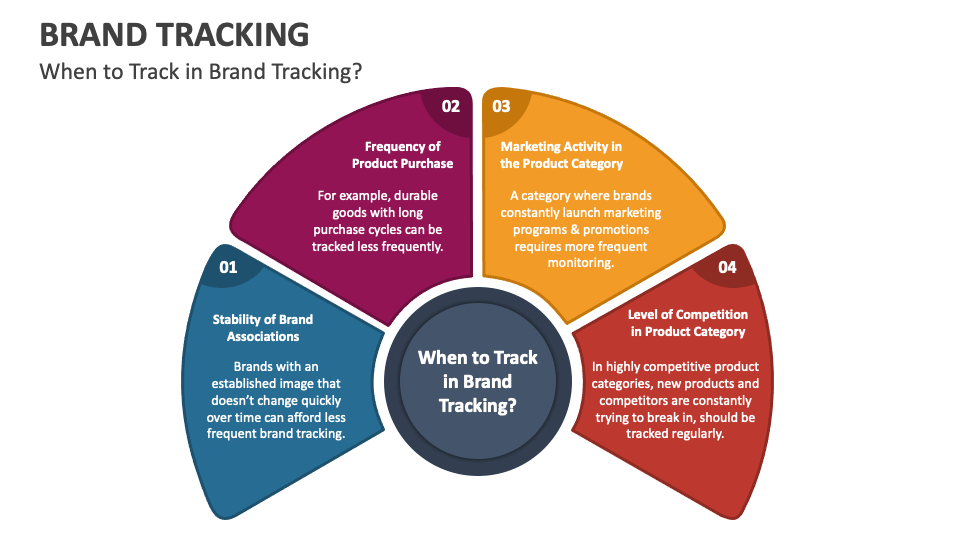
Instead of just quarterly or yearly reports, which are only beneficial for betterment, that requires a long process and involvement of the complete hierarchy in the company. Brand tracking is a continuous process that helps you make consistent and real-time changes when required.
It gives you a 360-degree view of how consumers and potential customers are seeing your brand, what is the level of trust in your brand, and how relatable your brand is. Also, with brand tracking, it becomes easier to predict losses or mishaps with ready mitigation plans.
2. Understanding Performance & Viability
When you monitor specific metrics, it gives clarity on what is working and what needs to be improved or removed. For example, if you ran two campaigns and tracked which one resonated the most with your audience, this will help you pick the advantageous elements from it. It can be content, channels, messages, or investments.
3. Competitor Analysis
Know what your competitors are up to, where they are outperforming your brand, and what their relative position is in the market. You can learn from their mistakes, identify the gaps, and discover the existing white-space opportunities. These things are often missed while evaluating your brand in isolation.
4. Better Decision Making
When you take numbers, facts, and data into account while making decisions, they turn out to be more accurate and with fewer mistakes. Whether it is finances, marketing, sales, or any other aspect of business. Your choices and efforts are based on actuality rather than just assumptions or trial & error methods.
How to Track Your Brand?
Here is a process in simple steps that you can follow:
1. Define Clear Objectives
Before diving into brand tracking plans, make sure you know what you want from the process. Define your end goals as to what you wish to monitor. It can be brand awareness, perception, positioning, loyalty, or any other metrics. This will help you choose the relevant brand tracking software and methodologies, and purposeful efforts.
2. Consistent Monitoring
As the term speaks for itself, it’s tracking and not a one-time check. Tracking is required to maintain a regular oversight of the decided metrics. You can set up intervals as per your needs or convenience; it can be monthly, quarterly, or annually. This important to spot trends and patterns, calculate the impact of marketing initiatives, and help in evolving according to the changing market conditions. Here, consistency helps in following the brand trajectory.
3. Leverage Multichannel Surveillance
Today, brands and businesses exist in multiple spaces, from traditional to modern-day media. Therefore, it is important to look over your brand’s presence across different channels to gain a holistic understanding of its performance. This will allow you to access the touchpoints of various media and environments.
4. Use PESTLE Analysis
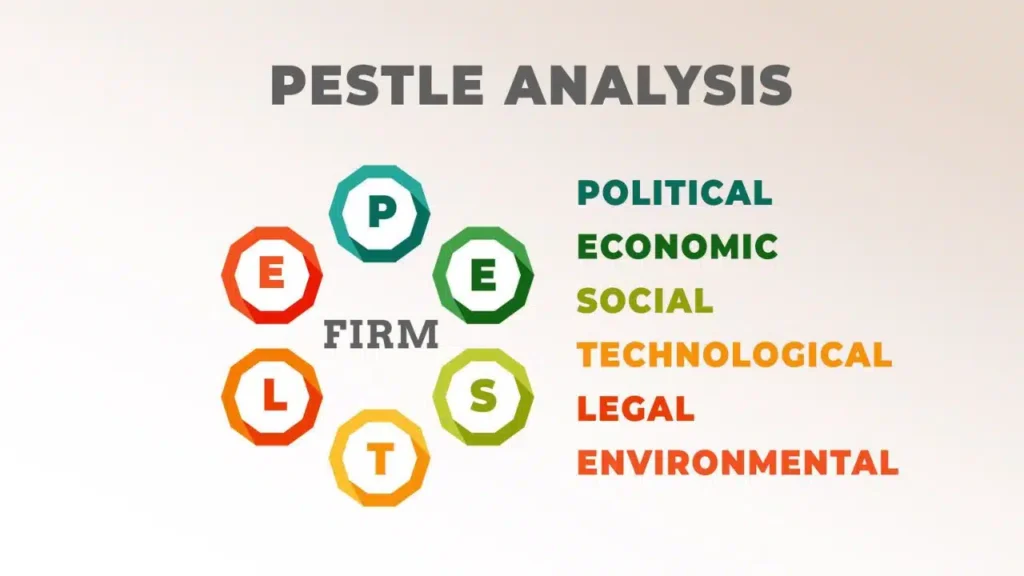
You must look not only at the figures but also at the reason behind those figures, for instance, the report says conversion rates dropped by 10%; here, you need to look at what is the reason behind this 10% drop. Understand the context of the information from every angle and how it’s affecting your business.
- P is for political analysis
- E is for economic analysis
- S is for social analysis
- T is for technological analysis
- L is for legal
- and E is for environmental
5. Feedback & Improvements
After completing the analysis. Comprehend the processed data and take the necessary steps. At last, keep refining your strategies.
Brand Tracking Methods
1. Surveys
It is one of the most commonly used methods in brand tracking, where data is collected from a sample of target customers and is analyzed by considering various brand-related metrics.
It is beneficial in getting direct feedback from customers. It also allows you to tailor your research specifically using quantitative data.
However, they are time-consuming and require immense research to pin down specific questions. It is not a great tool for real-time information gathering.
2. SMM
Social media monitoring (SMM) is a widely used tool in today’s digital space and is one of the most useful SEO processes. SMM is all about the online presence of your brand.
Useful in gaining real-time data, provides in-depth qualitative and quantitative data, access to a wider range of opinions, and is also cost-effective.
Some of the gaps can be inaccurate in sentiment analysis. Analysis of large sets of data becomes difficult at times, and also, social media does not represent all demographics or audience types.
3. Brand Health Metrics
Using Net Promoter Score (NPS) and Customer Satisfaction Score (CSAT) are useful metrics to gather quantitative data on brand performance.
The advantages include measurable data, allowing you to observe changes over time, and they are great for benchmarking against competitors.
It may not offer all rounding view on brand perception and requires consistent data collection. Also, interpreting results can be complicated.
4. Online Reviews
Insights from reviews, such as feedback on Quora, Google, or GQ ratings, and customer support, all of it gives you a real picture of what your customers have to say by actually using your brand. It is one of the great ways of product brand tracking.
Online Reviews are like a direct communication from the consumers, which can help you rectify issues instantly and is a cost-effective way of brand tracking.
The biggest fallback is that it can’t capture the complete spectrum of the audience and their word. It can be time-consuming to monitor and analyze the whole data. Many reviews can be fake or bot reviews.
5. Focus Groups
These are small groups of people specially chosen to discuss and give their opinion and feedback on a brand. It is one of the old school methods of gaining qualitative insights about customer behavior and brand perception.
This method gives you qualitative information and offers space for much more complex issues by facilitating interactive discussions.
Cons are that it can be expensive and time-consuming; also, a small group of people does not represent the whole population, therefore, results can be affected by a particular group’s dynamics.
Best Brand Tracking Tools
1. Brandwatch
Brandwatch is an enterprise-level and advanced social listening brand tracking software by Cision. It is an all-in-one suite for all your social media channels and large companies. It has a noticeable client base, including some of the biggest firms such as Nestle, Toyota, Carlsberg, Henkel, and many more.
Brandwatch offers services such as customer intelligence, search intelligence, SMM, media intelligence & insights, and more. They work across industries and provide solutions in various roles. Offering a data-driven approach to monitor your brand and create winning content.
2. Peec AI
Peec AI is your all-encompassing solution for AI brand tracking. It helps you keep an eye on essential metrics such as visibility, position, and brand sentiment. Claims to be trusted by over 2000 marketing teams with strong clientele such as WIX, Attio, fgs global, Brevo, and more.
It offers features such as setting up prompts that matter the most for your AI search strategy, and you can also add brands to see how you rank against them. Allows you to choose AI models, find citations that shape your visibility, and create a GEO strategy. Also, helps you to turn complex AI search data into simple and shareable insights for teams and clients.
3. Awario
Awario is a SaaS application made by SEO PowerSuite for brand tracking studies. It is a good fit for mid-market and SMBs (Small and Medium-Sized Businesses). Unlike other social media monitoring tools, Awario does not only rely on a single-party data provider, but it crawls over 13 billion webpages daily with additional APIs.
It can help you grow your brand awareness, do market research, and set email alerts. It also helps to be consistent while discussing in your inbox or engaging in social selling. Awario offers features such as white-label reports, multichannel monitoring, social media studies, Slack integration, and many more important features. You can also manage mentions for keywords in any language, any resource, and at any location.
Conclusion
Brand tracking is not optional if you wish to scale your business in the digital world, growing at a fast pace. We all know ‘what catches the eye, sells.’ Therefore, you must focus on your brand health by monitoring its key metrics, such as brand awareness, perception, positioning, and loyalty. There is a step-by-step process to do so, as we discussed above, and I have also mentioned some of the best tools and software used by brand tracking agencies or a brand tracking company. There are several methods to process the tracking, and you should use the right one to get the best outcome possible. Moreover, we also read the numbers and reports by Dynata, which clearly depict the importance of brand tracking. So track, improve, and scale.
Also Read: Influencer Marketing for Beginners: Jobs, Courses & Business Growth

SEO for Single-Page Apps: Proven Strategies for Traffic Boost
Looking for the best strategies to improve the performance of your single-page application? Don’t worry, in this blog, you will get to know everything about the SPA. Explore details about the best proven strategies for SEO for single-page apps. Here, you will also get to know the difference between SPA and MPA and common mistakes that you should avoid. Start reading.
What is a Single-Page Application? Example
A SPA or Single-Page Application is a modern web application that works inside a browser. It doesn’t require page reloading. This may sound difficult to understand, but you use this type of SPA application every day.
Some of the best examples of single-page applications are Gmail, Facebook, Google Maps, and GitHub. If you have noticed, instead of loading a completely new page, Gmail or other such SPA apps only update their content. They work on a single HTML file, which updates the content using JavaScript and CSS bundles.
Single-Page Application Vs Multi-Page Application
Understand the difference between SPA and MPA with the help of the table below.
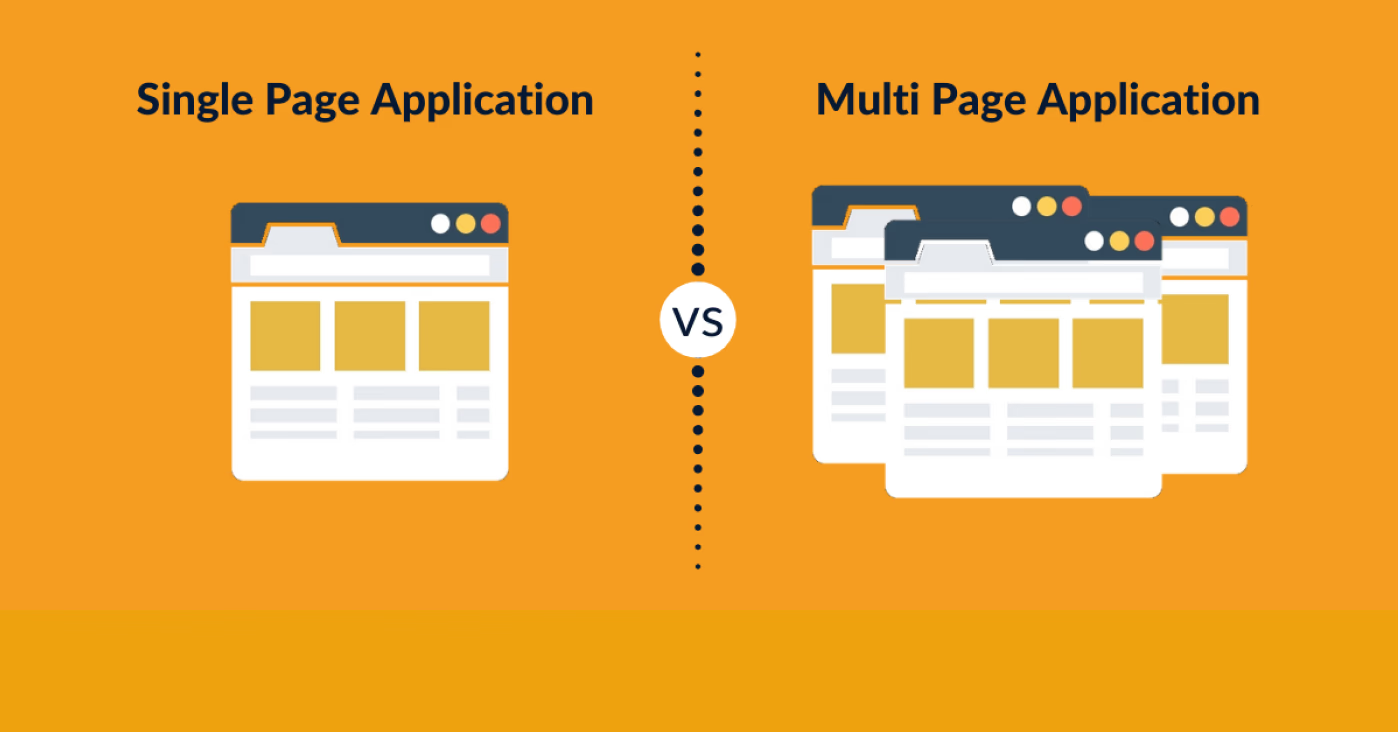
| Features | Single‑Page App (SPA) | Multi‑Page App (MPA) |
|---|---|---|
| Pages | One main page, Single URL | Many separate pages, each with its own URL |
| Navigation | Page doesn’t reload, its content only changes | Pages reload every time you click a link |
| User experience | Feels like a mobile app, fast and smooth to use | Slower than SPA, with every page reloading |
| How it works | Content is updated using JavaScript | Each page is generated on the server |
| Data transfer | Mostly just data like JSON | Full HTML pages are sent |
| SEO (search engines) | Difficult (SSR and pre‑rendering are needed for indexing) | Easier (Better SEO by default). |
| Good for | Dashboards, tools, or apps with lots of interaction | Used for content websites (blog, e-commerce) |
Benefits of Single-Page Application
SPA comes with several benefits, including faster and smoother user interaction. Let’s take a look at some of the notable benefits of a single-page application.
- Faster and smoother user experience: The user doesn’t need to jump from one page to another to get the result. Only one page is required, and it updates all the content.
- Smoother and mobile app-like interaction: SPA appears more like a mobile app. It is easy to navigate and gives a seamless experience.
- Reduces server load: The single-page applications fetch only a small amount of data, leading to reduced server load and improved efficiency.
- Increase performance: The first load might experience a slight delay, but everything runs faster afterward.
- Easy API integration: API like GraphQL and REST work together to build a data-driven application.
- Simple frontend development: Frameworks like React or Angular can make development faster and more efficient.
- Offline data storing: SPAs can store data using caching techniques that allow limited functions, even without an internet connection.
- Better user retention: Better speed and smoother navigation lead users to spend more time on the application.
- Cross-platform compatibility: SPAs work across different browsers and devices.
- Easy debugging and testing: SPA consists of modern frameworks that make it efficient for debugging and testing.
SEO Challenge with Single Page Applications
Along with the benefits, SPA comes with some limitations.
- Dependence on JavaScript: Search engines like Google and Opera find it difficult to fully process the content of JavaScript.
- Indexing delays: SPA indexing requires two steps: HTML and JS. It can slow down the visibility in the search results.
- Crawlability issue: Without proper routing, search engines may misunderstand the whole site as one page.
- Tracking issues: Without a defined setup, analytics can miss page views.
- Issue with Meta tags: Pages find it difficult to update titles and descriptions, which can lead to poor SEO results.
- Improper URL structure: Improper URLs can confuse the search engines.
- Limited social sharing: Social media depends on meta tags for social sharing. If meta tags are not properly rendered, then shared links may show an incorrect or empty preview.
SEO for Single-Page Apps
SEO is one of the best strategies that every website follows to rank at the top of the search engines, and the same is required for the single-page app. The following are some of the best SEO practices for SPAs.
Technical SEO Strategies for SPA
Implementing the right technical SEO strategies on your website can improve search engine crawling and indexing. It includes technical traits, including SPA crawling, indexability, SSR, and pre‑rendering.
SSR (Server-Side Rendering)
SSR is a technique in which the server generates a full HTML page before sending it to the user’s browser. It helps the content to be immediately visible instead of completely relying on JavaScript. SSR works by delivering ready-to-view pages. It is commonly used for content-based websites. It helps search engines to crawl through the actual content.
Pre-rendering
Pre-rendering for a single-page application generates static HTML for each route. It helps in improving SEO and social sharing. It works by loading the SPA in a headless CMS. Instead of executing JS live, it captures what the page looks like after implementing the HTML.
CSR (Client-Side Rendering)
It is a SPA approach, where the browser loads a basic HTML file and uses JS to display the content. It helps by creating a smoother experience for the users.
SSG (Static Site Generation)
It helps by creating HTML pages in advance. These pages display immediately when requested. SSG helps in increasing loading speed and providing better SEO performance.
Dynamic rendering
It is a hybrid approach that serves different versions of the same page. It depends on who is searching for it. Search engines get a simple HTML version while users get the full JS experience. This helps in smoother and faster loading of the pages.
On-Page Optimization Techniques for SPA Success
Optimizing SPA for SEO requires the right techniques that can make your SPA fully optimized for search engines. Follow these techniques for SPA success.
Use unique titles and meta tags
Each section should have a separate title and meta description. This is useful for search engines to understand the context and improve CTR (Click Through Rates).
Optimize your URL
Make sure that each page has a clear and meaningful URL. Avoid the use of hash-based (#) URLs, as they can confuse the search engines.
Use proper headings and subheadings
Add clear headings to nicely organize the content. Each page should have a clear main heading(H1) and meaningful subheadings.
Include Keywords
Focus on both primary and secondary keywords. Add them naturally to the titles, headings, and content. Avoid stuffing the keywords and keep your focus on readability.
Make sure the content is crawlable
Content should not completely rely on JavaScript. Using methods like SSR or pre-rendering can easily index your content.
Add images and media
Add alt text to the images, and compress the file size for faster page loading. This helps with both accessibility and increased page speed.
Internal linking
Use proper anchor tags that allow search engines to crawl and understand the website’s structure. It helps in making your website noticeable.
Schema markup
Schema markup is a code that communicates the real meaning of your page and simplifies the language so that search engines can understand. It is used for better content understanding. It also helps in improving the visibility.
Check the page loading speed
Use headless CRM and techniques like lazy loading and cache removal for faster page loading.
Optimize it for mobile-friendliness
Ensure your single-page apps are responsive and work smoothly on every device. Google first indexes the articles that are mobile-friendly.
Off-Page SEO Strategies for Single-Page Application
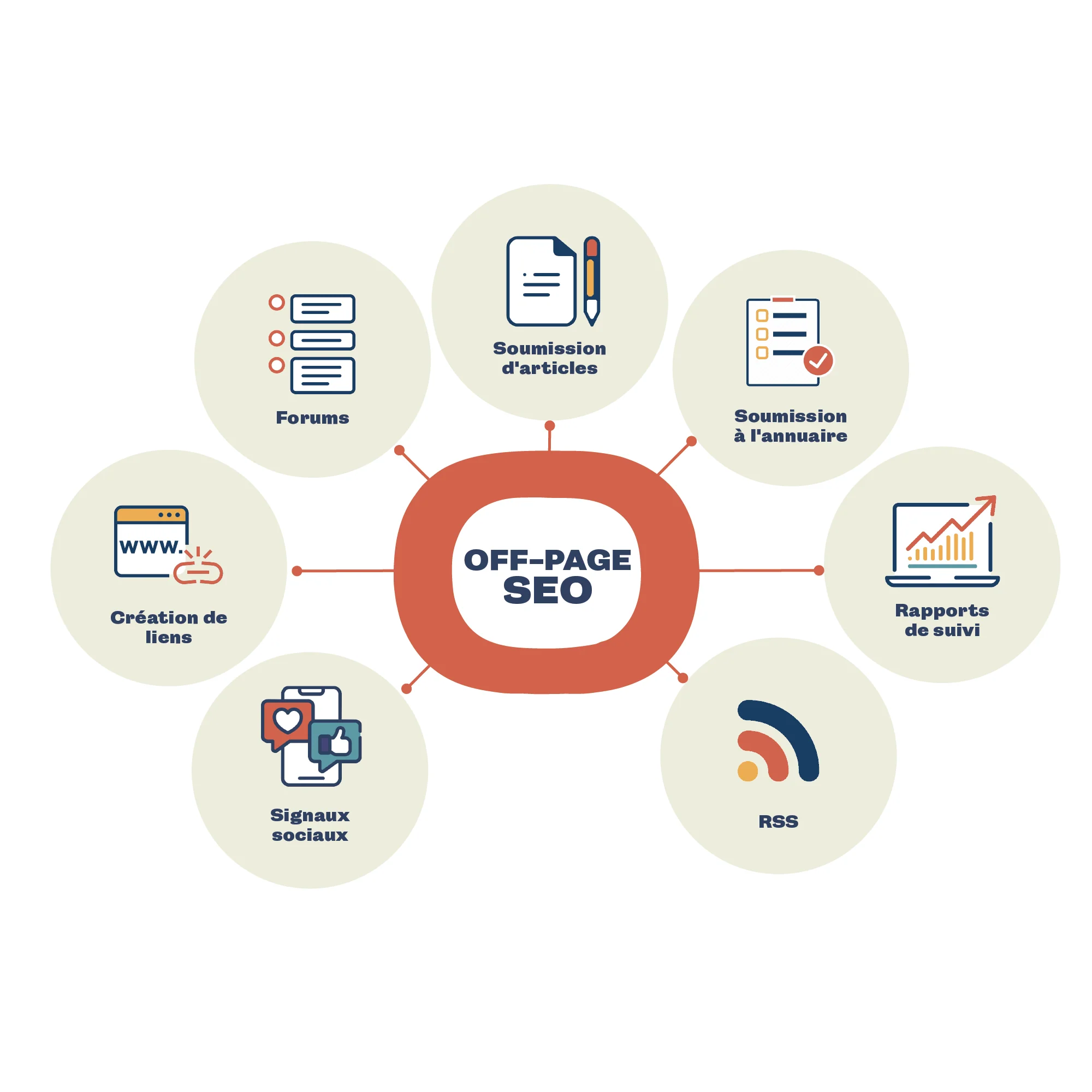
Off-page SEO strategies help in improving the trust and authority of the SPA outside the website. It is important for rankings and visibility. Explore SEO strategies for a single-page app.
Backlinks
Get your content linked by trusted and relevant websites. Focus on quality instead of quantity. Backlinks are useful as it improves the domain authority.
Guest posting
Write articles for other websites, which will include links to your SPA and will eventually build credibility.
Social media sharing
Promote your content on different social media platforms such as LinkedIn, Facebook, and other social media.
Common Single-Page Application SEO Mistakes to Avoid
These are some of the single-page application mistakes that one should avoid to keep their website growing.
- Incorrect tracking can result in inaccurate SEO analysis and poor decision-making.
- Depending only on CSR can block search engines from properly indexing your content.
- Improper use of a URL can lead to limited crawlability by search engines.
- Duplicate meta tags and content can reduce click-through rates and negatively impact ranking.
- Ignoring SSR or pre-rendering can result in poor visibility.
- Generic or AI content can reduce your chance of getting ranked.
- Bad or improper internal linking can stop search engines from crawling through your site.
- Slow page load can negatively affect the ranking and user experience.
- Designing websites only for desktops can cause trouble in indexing your website.
Related: What is Link Exchange in SEO? Its Types and Importance

Influencer Marketing for Beginners: Jobs, Courses & Business Growth
Know the best opportunities in the field of Influencer Marketing, along with the free influencer marketing courses that will help you become one.
Top 6 Organic SEO Agencies for Long-Term Growth
Top 6 organic SEO agencies for long-term growth for your business. Linksfrog, Delante, Siegemedia, Searchbloom, and WebFX are on the list.

