
Brand Tracking: Do You Know What People Talk About Your Brand?
As per brand awareness statistics 2026, brands with higher brand awareness have 2.7x more conversions than others. Also, 82% of consumers choose a known brand rather than an unfamiliar one.
But why am I making you aware of this data? The answer is to make you understand the importance of brand tracking. Today, it is one of the most ineluctable factors in growing a business. Keep reading to understand its meaning, methods, importance, best tools, and companies offering this service.
What is Brand Tracking?
In simple words, brand tracking is about keeping track of how your brand is performing in the market over time. It is a continuous process of analyzing brand health by measuring metrics, including awareness, perception, loyalty, and comprehensive brand equity.
What is the Importance of Brand Tracking?
A survey conducted by Dynata where 65% of respondents and an additional 9% of U.S. consumers said they love fewer than three brands, and some said they don’t even like a single brand. This clearly depicts the fugitive brand loyalty. So, let’s get to the reasons that businesses need to step up to track their brands.
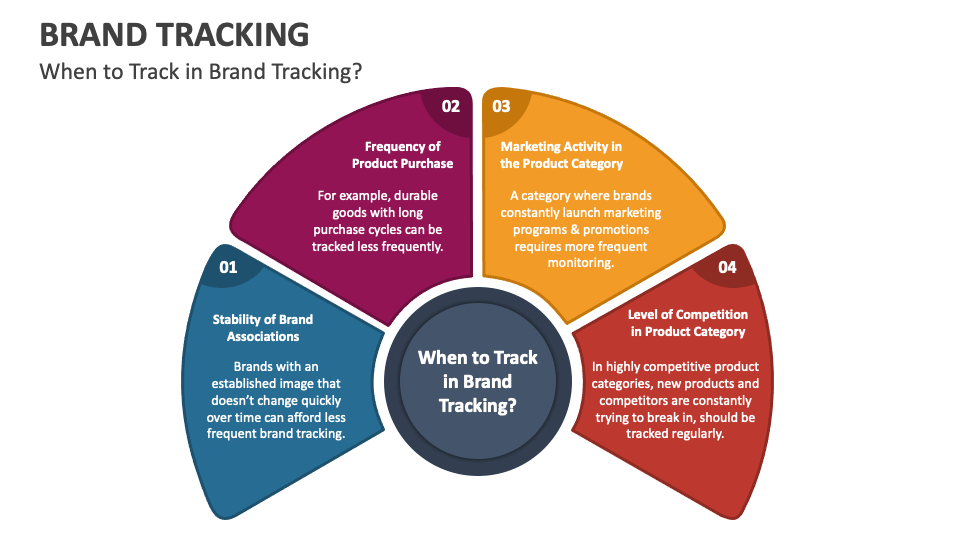
1. Broader View on Brand Health
Instead of just quarterly or yearly reports, which are only beneficial for betterment, that requires a long process and involvement of the complete hierarchy in the company. Brand tracking is a continuous process that helps you make consistent and real-time changes when required.
It gives you a 360-degree view of how consumers and potential customers are seeing your brand, what is the level of trust in your brand, and how relatable your brand is. Also, with brand tracking, it becomes easier to predict losses or mishaps with ready mitigation plans.
2. Understanding Performance & Viability
When you monitor specific metrics, it gives clarity on what is working and what needs to be improved or removed. For example, if you ran two campaigns and tracked which one resonated the most with your audience, this will help you pick the advantageous elements from it. It can be content, channels, messages, or investments.
3. Competitor Analysis
Know what your competitors are up to, where they are outperforming your brand, and what their relative position is in the market. You can learn from their mistakes, identify the gaps, and discover the existing white-space opportunities. These things are often missed while evaluating your brand in isolation.
4. Better Decision Making
When you take numbers, facts, and data into account while making decisions, they turn out to be more accurate and with fewer mistakes. Whether it is finances, marketing, sales, or any other aspect of business. Your choices and efforts are based on actuality rather than just assumptions or trial & error methods.
How to Track Your Brand?
Here is a process in simple steps that you can follow:
1. Define Clear Objectives
Before diving into brand tracking plans, make sure you know what you want from the process. Define your end goals as to what you wish to monitor. It can be brand awareness, perception, positioning, loyalty, or any other metrics. This will help you choose the relevant brand tracking software and methodologies, and purposeful efforts.
2. Consistent Monitoring
As the term speaks for itself, it’s tracking and not a one-time check. Tracking is required to maintain a regular oversight of the decided metrics. You can set up intervals as per your needs or convenience; it can be monthly, quarterly, or annually. This important to spot trends and patterns, calculate the impact of marketing initiatives, and help in evolving according to the changing market conditions. Here, consistency helps in following the brand trajectory.
3. Leverage Multichannel Surveillance
Today, brands and businesses exist in multiple spaces, from traditional to modern-day media. Therefore, it is important to look over your brand’s presence across different channels to gain a holistic understanding of its performance. This will allow you to access the touchpoints of various media and environments.
4. Use PESTLE Analysis
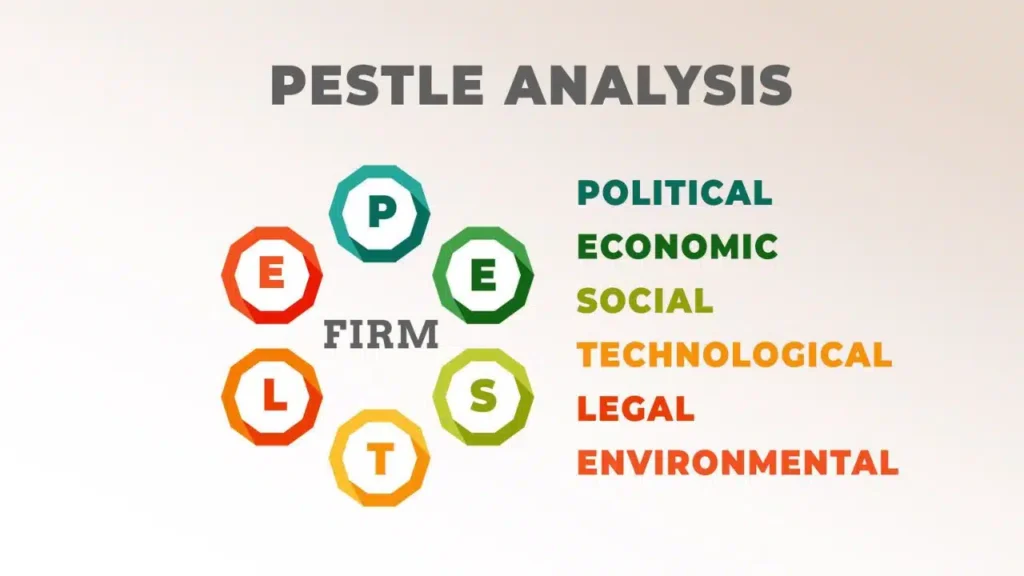
You must look not only at the figures but also at the reason behind those figures, for instance, the report says conversion rates dropped by 10%; here, you need to look at what is the reason behind this 10% drop. Understand the context of the information from every angle and how it’s affecting your business.
- P is for political analysis
- E is for economic analysis
- S is for social analysis
- T is for technological analysis
- L is for legal
- and E is for environmental
5. Feedback & Improvements
After completing the analysis. Comprehend the processed data and take the necessary steps. At last, keep refining your strategies.
Brand Tracking Methods
1. Surveys
It is one of the most commonly used methods in brand tracking, where data is collected from a sample of target customers and is analyzed by considering various brand-related metrics.
It is beneficial in getting direct feedback from customers. It also allows you to tailor your research specifically using quantitative data.
However, they are time-consuming and require immense research to pin down specific questions. It is not a great tool for real-time information gathering.
2. SMM
Social media monitoring (SMM) is a widely used tool in today’s digital space and is one of the most useful SEO processes. SMM is all about the online presence of your brand.
Useful in gaining real-time data, provides in-depth qualitative and quantitative data, access to a wider range of opinions, and is also cost-effective.
Some of the gaps can be inaccurate in sentiment analysis. Analysis of large sets of data becomes difficult at times, and also, social media does not represent all demographics or audience types.
3. Brand Health Metrics
Using Net Promoter Score (NPS) and Customer Satisfaction Score (CSAT) are useful metrics to gather quantitative data on brand performance.
The advantages include measurable data, allowing you to observe changes over time, and they are great for benchmarking against competitors.
It may not offer all rounding view on brand perception and requires consistent data collection. Also, interpreting results can be complicated.
4. Online Reviews
Insights from reviews, such as feedback on Quora, Google, or GQ ratings, and customer support, all of it gives you a real picture of what your customers have to say by actually using your brand. It is one of the great ways of product brand tracking.
Online Reviews are like a direct communication from the consumers, which can help you rectify issues instantly and is a cost-effective way of brand tracking.
The biggest fallback is that it can’t capture the complete spectrum of the audience and their word. It can be time-consuming to monitor and analyze the whole data. Many reviews can be fake or bot reviews.
5. Focus Groups
These are small groups of people specially chosen to discuss and give their opinion and feedback on a brand. It is one of the old school methods of gaining qualitative insights about customer behavior and brand perception.
This method gives you qualitative information and offers space for much more complex issues by facilitating interactive discussions.
Cons are that it can be expensive and time-consuming; also, a small group of people does not represent the whole population, therefore, results can be affected by a particular group’s dynamics.
Best Brand Tracking Tools
1. Brandwatch
Brandwatch is an enterprise-level and advanced social listening brand tracking software by Cision. It is an all-in-one suite for all your social media channels and large companies. It has a noticeable client base, including some of the biggest firms such as Nestle, Toyota, Carlsberg, Henkel, and many more.
Brandwatch offers services such as customer intelligence, search intelligence, SMM, media intelligence & insights, and more. They work across industries and provide solutions in various roles. Offering a data-driven approach to monitor your brand and create winning content.
2. Peec AI
Peec AI is your all-encompassing solution for AI brand tracking. It helps you keep an eye on essential metrics such as visibility, position, and brand sentiment. Claims to be trusted by over 2000 marketing teams with strong clientele such as WIX, Attio, fgs global, Brevo, and more.
It offers features such as setting up prompts that matter the most for your AI search strategy, and you can also add brands to see how you rank against them. Allows you to choose AI models, find citations that shape your visibility, and create a GEO strategy. Also, helps you to turn complex AI search data into simple and shareable insights for teams and clients.
3. Awario
Awario is a SaaS application made by SEO PowerSuite for brand tracking studies. It is a good fit for mid-market and SMBs (Small and Medium-Sized Businesses). Unlike other social media monitoring tools, Awario does not only rely on a single-party data provider, but it crawls over 13 billion webpages daily with additional APIs.
It can help you grow your brand awareness, do market research, and set email alerts. It also helps to be consistent while discussing in your inbox or engaging in social selling. Awario offers features such as white-label reports, multichannel monitoring, social media studies, Slack integration, and many more important features. You can also manage mentions for keywords in any language, any resource, and at any location.
Conclusion
Brand tracking is not optional if you wish to scale your business in the digital world, growing at a fast pace. We all know ‘what catches the eye, sells.’ Therefore, you must focus on your brand health by monitoring its key metrics, such as brand awareness, perception, positioning, and loyalty. There is a step-by-step process to do so, as we discussed above, and I have also mentioned some of the best tools and software used by brand tracking agencies or a brand tracking company. There are several methods to process the tracking, and you should use the right one to get the best outcome possible. Moreover, we also read the numbers and reports by Dynata, which clearly depict the importance of brand tracking. So track, improve, and scale.
Also Read: Influencer Marketing for Beginners: Jobs, Courses & Business Growth


